
Sleep Study Test in Ahmedabad: Detecting Sleep Apnea and Snoring Disorders
Introduction
Are you tired of dealing with constant snoring, restless nights, or waking up feeling drained even after a full night’s sleep? These might be red flags pointing to a sleep disorder like sleep apnea. If left unchecked, sleep apnea and snoring issues can disrupt your rest and even raise your chances of high blood pressure, heart disease, and low productivity during the day. That’s why getting a sleep study test in Ahmedabad is so important. This straightforward, non-invasive test allows specialists to pinpoint sleep apnea, snoring, and other sleep-related problems, helping you finally achieve the restful, rejuvenating sleep your body craves.
What is a Sleep Study Test, and How Does it Help Detect Sleep Apnea and Snoring?
A sleep study test, also known as polysomnography, is a medical procedure that monitors your body’s functions while you sleep. It keeps track of:
- Your breathing rate and airflow
- Oxygen levels in your blood
- Brain activity (EEG)
- Heart rate and rhythm
- Body movements and those snoring sounds
For individuals dealing with sleep apnea, this test reveals repeated pauses in breathing throughout the night, often accompanied by loud snoring and restless sleep. By pinpointing these episodes, doctors can evaluate the severity of the condition and devise effective treatment plans.
But sleep studies aren’t just for apnea; they can also uncover:
- Chronic snoring issues
- Narcolepsy (those sudden sleep attacks)
- Restless leg syndrome
- Patterns of insomnia
In a nutshell, a sleep study gives a thorough insight into how your body operates during rest—something that a regular check-up just can’t provide.
Where Can I Get a Sleep Study Test Done in Ahmedabad?
Ahmedabad has a variety of options for those looking to undergo a sleep study. You can explore testing at:
- Specialized ENT hospitals that come with sleep labs.
- Multi-specialty hospitals that provide neurology and pulmonology services.
- Sleep centers that focus solely on diagnosing sleep disorders.
These days, many clinics also offer home-based sleep study tests, allowing you to set up the equipment right in your own bedroom. While hospital-based studies are still considered the gold standard for accuracy, home tests are gaining popularity for their convenience. If you’re already seeing an ENT specialist for snoring or breathing problems, don’t hesitate to ask about scheduling a sleep study in Ahmedabad.
How Much Does a Sleep Study Test Cost in Ahmedabad?
The price of a sleep study in Ahmedabad varies based on the type and where it’s conducted:
- Hospital-based sleep study (polysomnography): ₹7,000 – ₹12,000
- Home-based sleep test: ₹4,000 – ₹7,000
Several factors can influence these costs:
- Whether it’s a single-night or multi-night test
- The type of equipment used (basic versus advanced monitoring)
- The reputation and facilities of the hospital
- If the test is covered by insurance or corporate health plans
While the expense might seem high, think of it as a worthwhile investment when you consider the serious long-term risks of untreated sleep apnea, like high blood pressure, complications from diabetes, heart disease, and even stroke.
Who Should Consider Taking a Sleep Study Test in Ahmedabad?
You may need a sleep study if you experience any of these symptoms:
Loud, chronic snoring that disturbs others
Pauses in breathing during sleep (noticed by a partner or family member)
Excessive daytime sleepiness or fatigue despite adequate sleep
Frequent morning headaches
Difficulty concentrating or memory lapses
Waking up gasping or choking
High-risk groups include:
Individuals who are overweight or obese
People with high blood pressure or diabetes
Middle-aged and elderly adults
Those with a family history of sleep disorders
What Happens During a Sleep Study Test (Polysomnography)?
Many patients often feel anxious about what a sleep study entails. The reassuring part is that it’s entirely non-invasive and painless. Here’s a quick rundown of what typically happens:
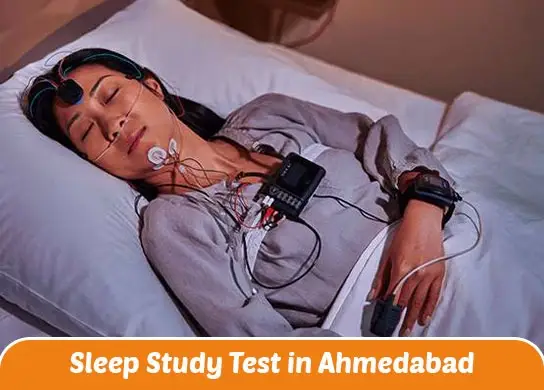
- Preparation: You’ll head to the hospital sleep lab in the evening (or set up the equipment at home). Electrodes and sensors will be placed on your head, chest, and legs to monitor brain waves, heart activity, and breathing.
- Monitoring Sleep: You’ll sleep in a calm, cozy environment while the equipment tracks your body’s functions. A technician will keep an eye on the data from a distance.
- Analysis: The following morning, your results will be reviewed to determine how many apnea episodes you had, along with your oxygen levels, sleep stages, and movements.
- Consultation: A specialist will go over the findings with you and suggest treatment options, which may include CPAP therapy, lifestyle adjustments, or even surgery if necessary.
Is a Sleep Study Test at Home in Ahmedabad Available?
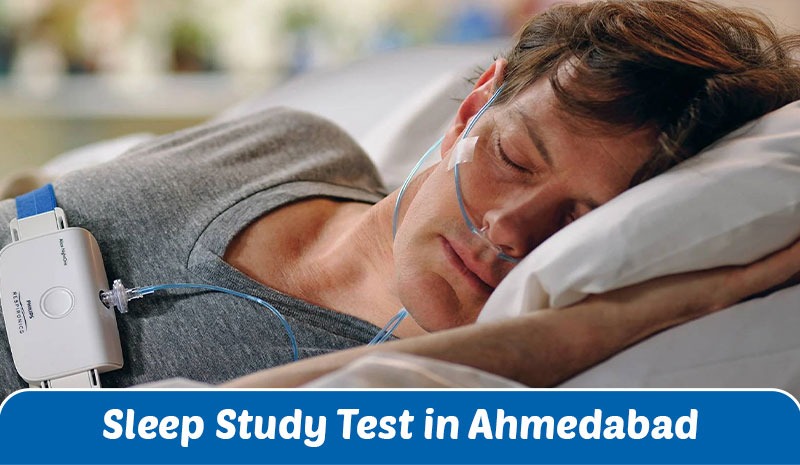
Absolutely! Nowadays, many hospitals and clinics offer home-based sleep study tests for those who value their privacy or find it challenging to spend a night in a hospital setting.
Here are some benefits of opting for home-based sleep studies:
- You can sleep in your own familiar environment
- It’s generally more comfortable and less stressful
- It tends to be more budget-friendly compared to tests done in a hospital
However, there are some limitations to consider:
- These tests might not gather as much data as a sleep lab would
- There’s less supervision from technicians throughout the night
- They’re mainly suitable for those suspected of having moderate to severe sleep apnea, but not for more complex cases
If your doctor thinks you might have multiple sleep disorders or other complications, they might suggest a full hospital-based polysomnography for more accurate results.
How Accurate is a Sleep Study Test for Diagnosing Sleep Apnea and Other Disorders?
A hospital-based sleep study is often regarded as the gold standard for diagnosing sleep apnea. This is because it boasts an impressive accuracy rate, monitoring various body functions all at once.
- When it comes to hospital-based studies, they achieve an accuracy of 95–98% in identifying apnea episodes and sleep disruptions.
- On the other hand, home-based studies offer an accuracy of 80–90%. While they are dependable for detecting apnea, they might overlook more complex disorders.
It’s crucial to have the results interpreted by a qualified ENT or sleep specialist, as their expertise is just as vital as the test itself. A precise analysis paves the way for the right treatment plan, whether that involves lifestyle changes, CPAP therapy, or even surgical options.